
UPPI and UP Geography host UNamur for workshop on digital traces
UPPI faculty and researchers participated in the Dissemination Forum on the Key Indicators of the 2025 National Demographic and Health Survey (NDHS) held March 30, 2026, at the Philippine Statistics Authority (PSA).

The forum featured recent estimates on demographic and health indicators, including child health and development, maternal health and domestic violence, and fertility and planning. Dr. Maria Midea Kabamalan, one of UPPI's faculty members, synthesized the session by presenting the policy implications of the 2025 NDHS results. She highlighted that NDHS indicators are not only vital for crafting policies and programs to address population needs, but also essential for tracking the country’s 2030 SDG targets.
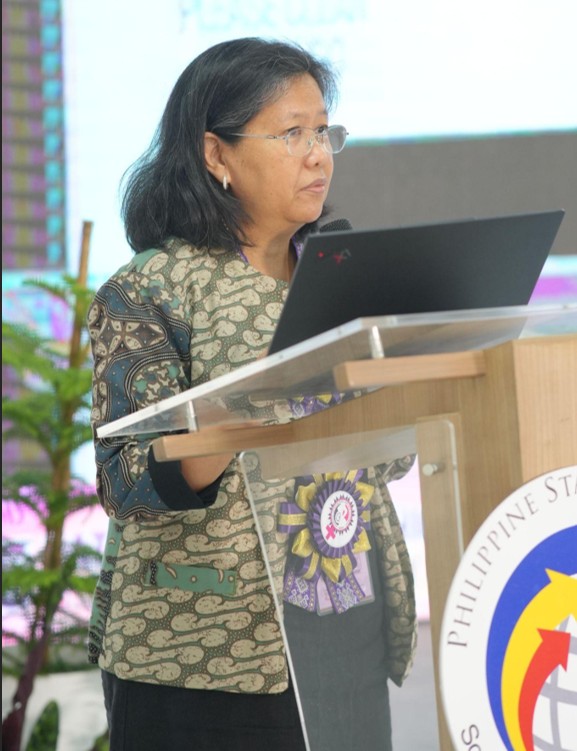
Two SDG indicators are likely to be attained by 2030, including the under-5 mortality rate. Currently at 22 deaths per 1,000 live births, it is only one point away from the 2030 target of 21. Additionally, skilled birth attendance stands at 94% for women aged 15–49, just six percentage points away from the 100% SDG target.
To address SDGs requiring urgent attention, Dr. Kabamalan mentioned several key priorities: reducing adolescent birth rates and child mortality; attaining full vaccination coverage for children; enhancing antenatal and postnatal care; and promoting help-seeking behaviors to combat intimate partner violence.
Lastly, she emphasized crafting regionally targeted interventions to address regional disparities. For example, the under-5 mortality rate is lower in Cagayan Valley (7) but higher in MIMAROPA (41). Meanwhile, the Ilocos Region garnered the highest percentage of vaccinated children (96%), while BARMM had only 22%. Dr. Kabamalan believes that tailored approaches will be more effective in ensuring that no Filipino is left behind.
You may access the Facebook livestream of the 2025 NDHS National Data Dissemination Forum here: https://www.facebook.com/share/v/1Dyzhk8933/
Share